
In the 15+ years in operational use around the world, Automatic Dependent Surveillance-Broadcast (ADS-B) has fundamentally changed the way aircraft navigate the airspace. Air traffic control organizations and the controllers themselves rely on the heightened situational awareness and navigational accuracy that ADS-B provides.
In those ensuing years, certain trans-oceanic routes have become more direct, aircraft are able to be spaced closer together, airspaces have become safer, and greenhouse gas emissions have been reduced.
But controllers and air navigation service providers (ANSPs) aren’t the only ones who have benefitted from ADS-B. Before ADS-B became a widely used tool in the cockpit, situational awareness relied on traditional methods, such as visual observation, communication with air traffic control and other aircraft, and ground-based radar systems.
For pilots who remember flying before ADS-B was widely utilized, the question isn’t necessarily whether the technology would have made flying easier. It’s what that additional layer of information might have changed in the cockpit.
Two Aireon employees – and long-time pilots – give their perspective on how military and civilian operations would have looked significantly different with ADS-B in the cockpit.
More efficient operations for military pilots
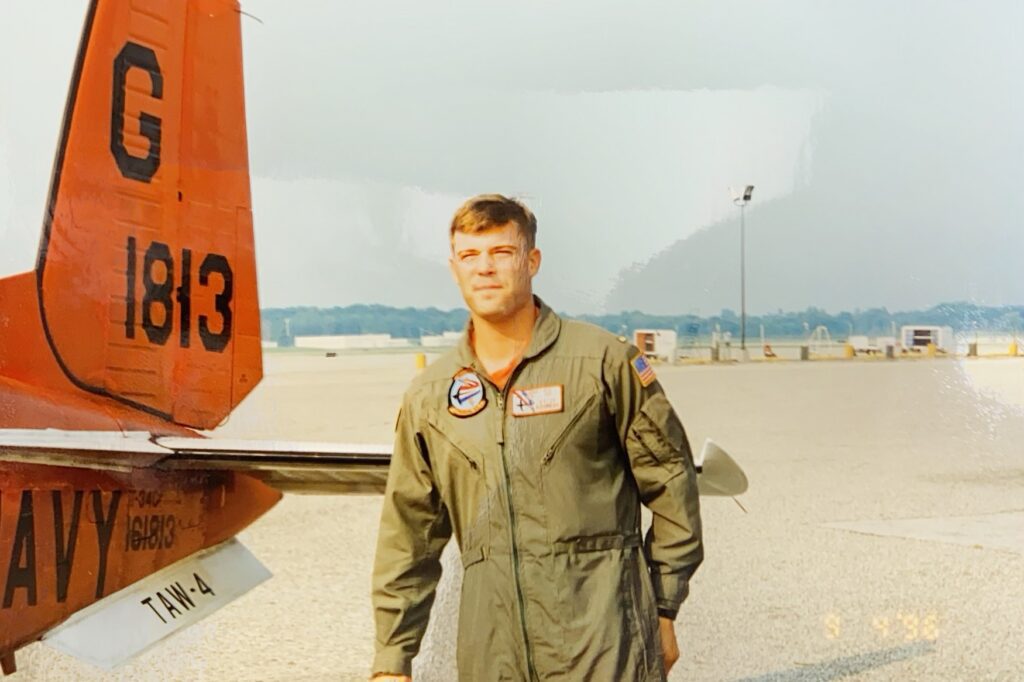
Derek Fleck, Aireon Director of Business Development for Defense and Intelligence, flew T-34 training aircraft and SH-60B/MH-60R helicopters for the U.S. Navy from 1995 to 2015. Over the course of his career, Fleck logged more than 3,000 flight hours supporting global maritime security missions, flying from frigates, destroyers, cruisers and aircraft carriers. The helicopters he flew were primarily used for anti-surface and anti-submarine warfare, but as a rotary-wing pilot, he also conducted search-and-rescue, personnel transfer, and vertical replenishment (logistics) missions.
When Fleck looks back on his over 26 years in the Navy, he recalls that there was limited technology aboard the aircraft designed to help crews detect and avoid other aircraft.
“All of my flight time occurred before ADS-B was widely mandated. Our primary means of situational awareness of other aircraft was ‘see and avoid’ in visual meteorological conditions. During instrument meteorological conditions, situational awareness was provided to us by air traffic control authorities (national airspace), or controllers in the Combat Information Center (at sea deployed). As such, there was very limited technology inside the aircraft to assist pilots with avoiding other aircraft,” said Fleck.
For military operations, crews play a critical role in maintaining safety. In Fleck’s experience, the helicopters’ onboard radar was designed to search for ships and submarines, not to provide the full picture of surrounding air traffic. Identification Friend or Foe (IFF) interrogations could provide some information, but it was often limited.
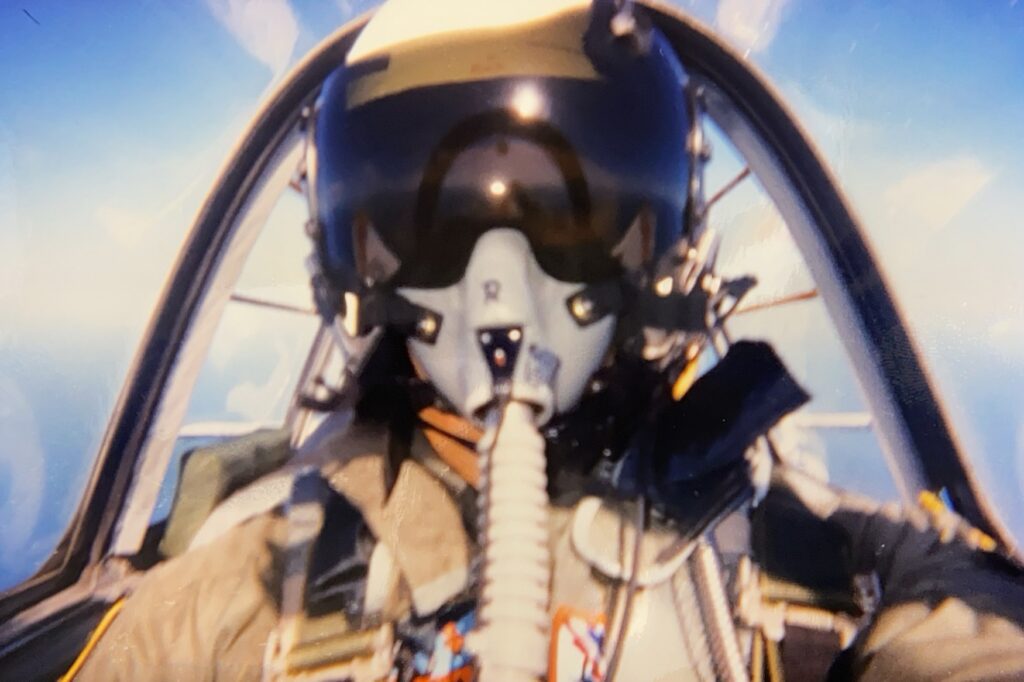
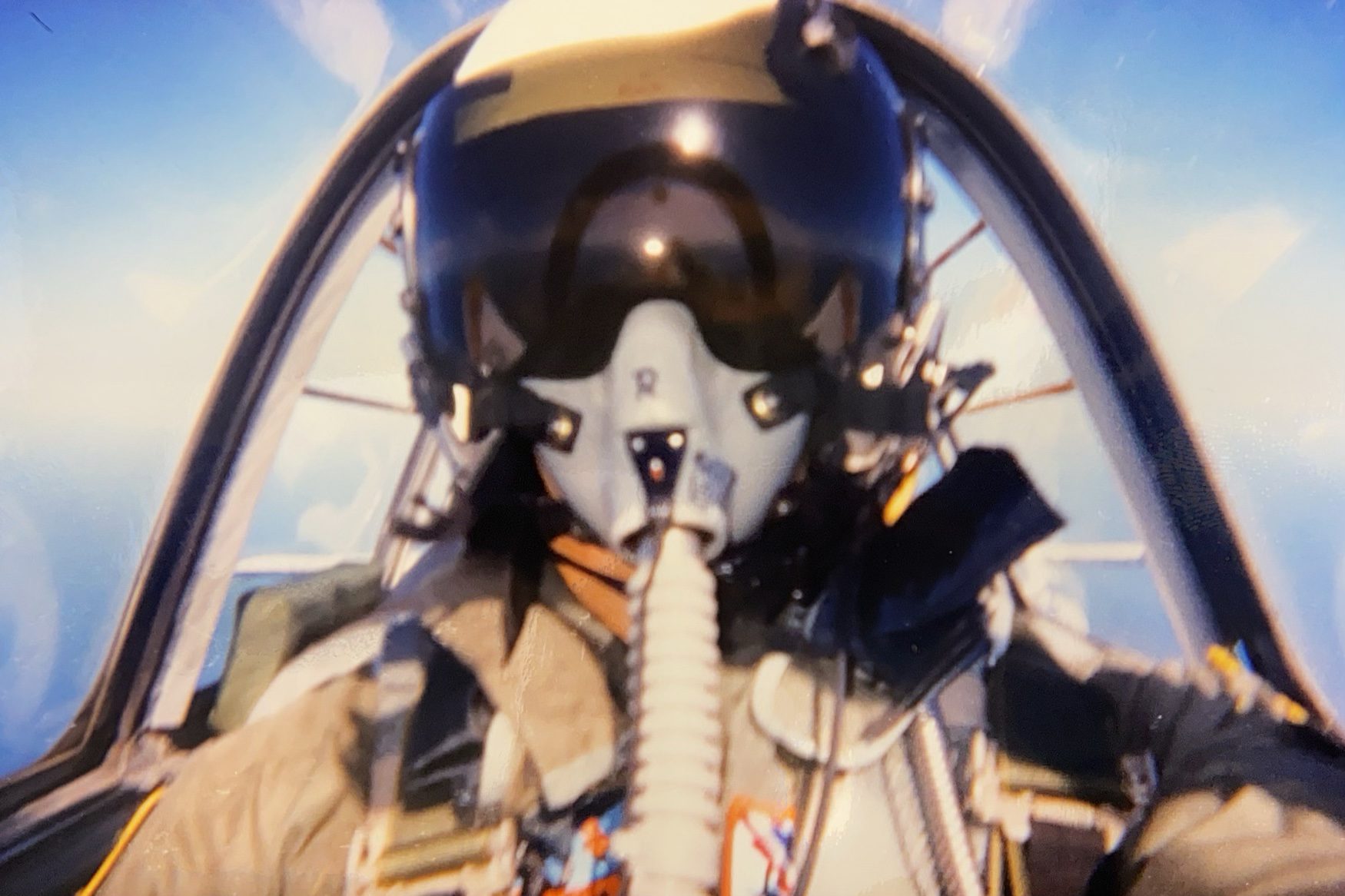
Flying a multi-pilot aircraft, often with a sensor operator in the back, gave Fleck another set of eyes to help monitor the surrounding airspace. His crews were particularly conscious of maintaining an outside scan both when flying domestically and when operating in foreign airspaces. In many ways, staying aware of the aircraft around them was a constant part of the job. “If ADS-B technology had been more widely mandated earlier, it would have allowed our crews to spend more time concentrating on mission or training, and less time focused on ‘clearing our airspace,’” said Fleck.
Giving private pilots peace of mind in the air
Byron Custer, Aireon Test Engineer, brings a different perspective to the role of ADS-B, having flown recreationally rather than professionally. When Custer started at Aireon in 2023, he already had perspective on ADS-B and the advantages that it provides from firsthand experience.
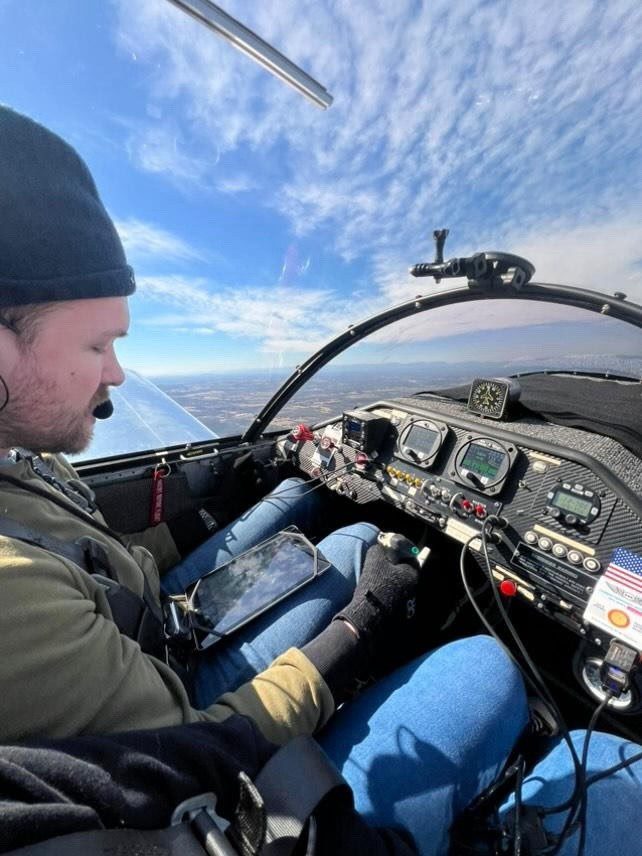
Custer started flying in 2019, completing his first solo flight in a 1946 Aeronca Champion. His early flying career also included aircraft such as the Piper Cherokee, Cessna 172, Cessna 150 and Mooney 201. He learned many of the fundamentals of flying in simple aircraft, where looking outside the cockpit was just as important as monitoring the instruments.
By the time Custer began flight training, ADS-B was already becoming widely adopted. He immediately saw its value as an additional source of information, complementing a pilot’s awareness and providing a more complete picture.
“Having learned to fly with paper charts and on an aircraft that had the FAA minimum requirements for instrumentation, when I finally got ADS-B in the cockpit, it fundamentally changed my situational awareness in the air. Being able to observe traffic in your area and receive alerts if traffic gets too close was game changing as a pilot,” said Custer.
One of the most important lessons when looking back at the evolution of ADS-B is that technology isn’t meant to replace the fundamentals pilots have relied on for generations; it is meant to add to them.
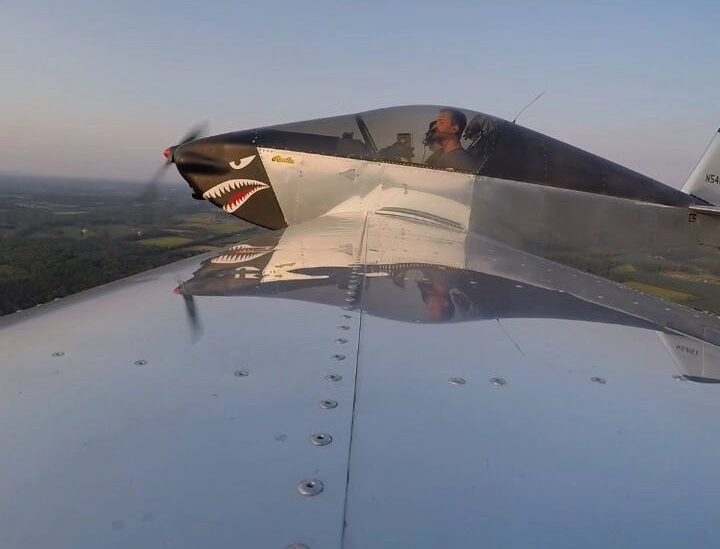
“Technology can fail, ATC might miss a potential collision warning, another pilot might not be paying attention, I might be distracted; there are so many contributing factors that could lead to an accident. ADS-B adds another layer to pilot safety and gives controllers and pilots a full picture of all the aircraft in the airspace. The additional layers of visibility ADS-B provides, helps prevent potential collisions and provides additional peace of mind in the cockpit.” said Custer.
To learn more about Aireon’s ADS-B capabilities and how we are advancing aviation, visit Aireon Technology
